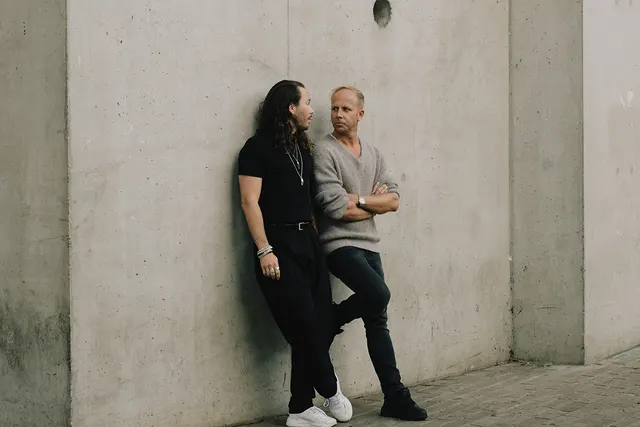




Young people aren’t short on discipline. They’re short on role models.
Let’s be honest: the standard of many graduates entering our sector today is low. Everyone knows it, but few dare to say it. But are hotel schools really to blame? Two things make all the difference in our profession, and neither can be learned in a classroom.
The first is the basics. The real basics. The kind you observe and experience. I had the admittedly unfair advantage of growing up in a family working in hospitality and accompanying my relatives to the best restaurants and hotels from an early age. There, I discovered both the fundamentals and excellence. I didn’t learn etiquette from a book, but by immersing myself in that world and observing good examples.
The second is the ability to lead a team. In my training sessions at hospitality establishments in Flanders, this is the number one problem, and yet it features in no curriculum. We train people to cook and serve customers, but not to lead a brigade or a team. Yet this is precisely where an establishment’s success or failure is decided. Can schools address this? Barely. They lack the budget, practical experience and innovation to do so. This is not a teaching problem, it is a structural one.
And the issue goes far beyond money or regulation. Recently, I looked at a textbook used at one of the world’s top hotel management schools. One of its chapters was entitled “complaint management”. Think about that for a moment: the course starts from the premise that there will be complaints. Personally, I would prefer a chapter entitled “complaint avoiding techniques”. Because the very essence of hospitality is not to manage complaints, but to ensure they never arise in the first place.
Don’t take my word for it: look at where the great professionals really come from. With thirty-two stars, Joël Robuchon remains the most decorated chef in history. Yet his greatest achievement is not his record, but the chefs he trained: Gordon Ramsay, Eric Ripert and a whole generation of talent.
Closer to home, Peter Goossens and Geert Van Hecke both studied at the same hotel school, Ter Duinen, which is also my alma mater. Yet that is not where they became the chefs we know today. They were shaped by masters in great kitchens. And their legacy lives on through the chefs they have trained themselves. Tellingly, Geert Van Hecke later became personally involved in training. The masters had to take matters into their own hands.
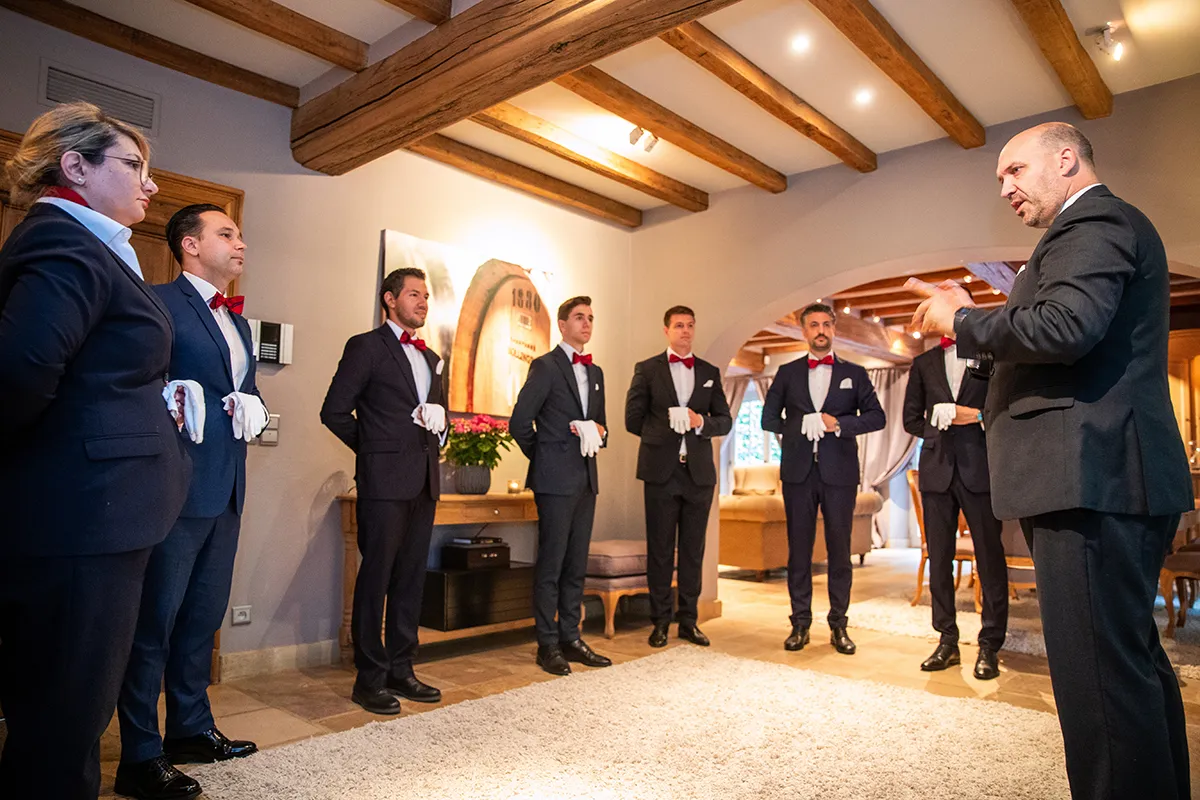
So spare me the talk about “young people lacking discipline”. It’s not true. They aren’t short on discipline; they’re short on role models. At our butler school, we have deliberately turned the usual approach on its head: the training is more demanding for instructors than for students. My students always see me in a suit and tie, punctual and careful in my choice of words, because I expect the same from them. It’s up to me to lead by example. Discipline follows naturally. These are precisely the role models we allowed to disappear, before blaming eighteen-year-olds for it.
So what’s the solution? Certainly not a new curriculum, but better support for teachers. Let’s give them the breathing space they need to keep developing. Let them identify trends themselves, before they even reach the public authorities. A new professional qualification has to pass through the sectors and the authorities before it reaches the classroom. By the time the teacher has mastered the subject, it is often already out of date.
The art of the trade has never been passed on in a classroom. It has been passed from hand to hand. So let’s stop pretending a curriculum can replace a master. Let’s not blame teachers; let’s give them the breathing space they need.
Vincent Vermeulen, Founder of School For Butlers & Hospitality / International speaker
Question about this story? Ask your question
Keep following this
Get an email when a new story is published. No account needed.
- ThemeHotel talent and management
- SubjectNews