



Alexis Fache: Executive Assistant Manager Food & Beverage, Grand Hyatt Hong Kong
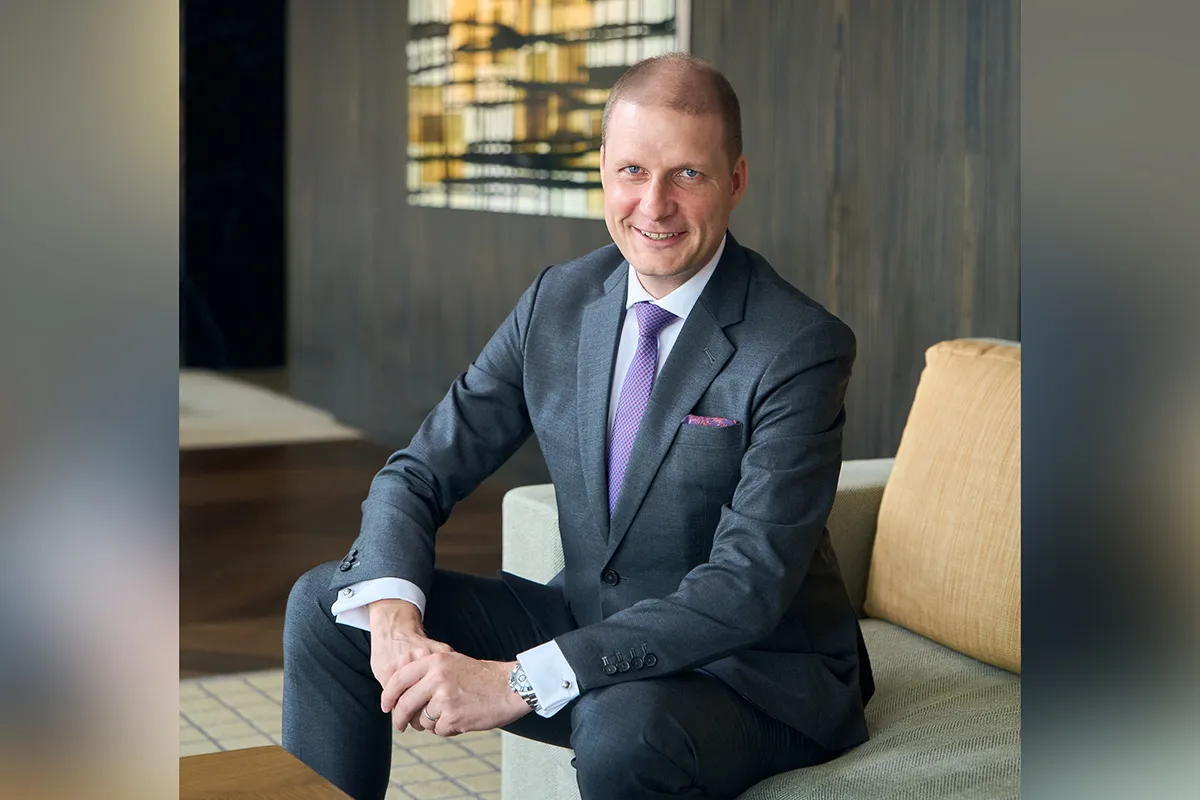
The Ghent rolled ‘r’ is still very much in evidence. Even after twelve countries, several continents and an international career that has taken him from catering kitchens in Ghent to the Middle East, Africa and South-East Asia, and on to Hong Kong. When we meet Alexis Fache, Executive Assistant Manager Food & Beverage at Grand Hyatt Hong Kong, the conversation quickly moves beyond titles and organisational charts and returns to Ghent. To Sint-Barbara. To the way education, language and culture become deeply rooted in each of us, even thousands of miles from home. “You change countries,” he says, “but not your foundations.”
Those foundations were built around the family table. At home, they ate together, hosted guests and celebrated. Hospitality was not a profession, but a given. Moving into catering, events and major sporting occasions such as the Six Days, international ATP tournaments and golf events came naturally. He did not learn hospitality from books, but on the job, amid logistics, timing and expectations.
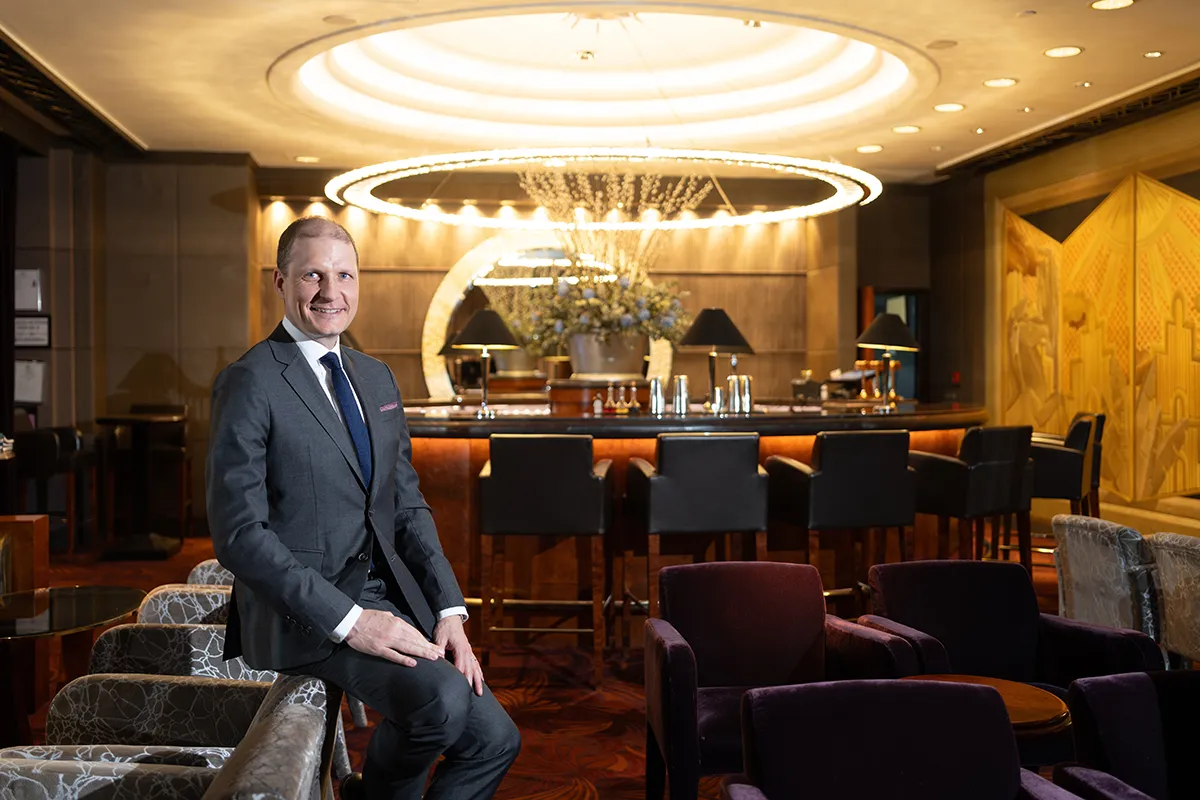
Today, he helps run one of Asia’s largest food & beverage operations: sixteen outlets, around six hundred employees, international events and a constant flow of guests. At peak times, more than a thousand people visit the hotel’s restaurants each day. Yet he refuses to overstate the importance of his role. “We’re on stage. We’re performers. Our job is to make people happy. We’re not cardiac surgeons.” This perspective is not a sign of indifference, but a way of staying clear-headed without losing himself.
The marathon as a model for management
In a longer conversation with Alexis, one metaphor keeps coming up: it’s a marathon. He runs several times a week himself. No ultra-trail races, but endurance runs where consistency matters more than speed. “Things never go quite as planned. There’s always something unexpected. The better prepared you are, the calmer you can stay.”
He applies this approach directly to his work. Before a race, he lays out his clothes the night before, plans his breakfast and arrives early to warm up. At Grand Hyatt, he follows the same principle: anticipate, organise and filter information. With sixteen outlets, it is impossible for him to oversee everything. He still approves every menu, but cannot supervise its execution everywhere. Hundreds of emails and messages come in every day. “You have to learn to read quickly and pick out the essentials. What really matters?”
Micromanagement is out of the question. A broad overview, preparation and trust in the teams are essential to avoid being overwhelmed by the scale of the operation.
Ownership over control
Rather than control, he deliberately chooses to empower people. Each outlet manager works to a comprehensive annual plan covering food, beverage, entertainment and marketing. They present their plans, receive challenging questions and make adjustments if necessary. But once the plan is approved, responsibility is theirs. “You gotta own it.”
In his view, growth does not come simply from doing what you are asked. “You don’t progress by limiting yourself to your job description. You progress by taking the initiative.” His role is to create a safe environment where employees feel able to make suggestions. But safety does not mean a lack of expectations. “You’re responsible for your operation. If you propose something, you have to own it.”
In recent years, this approach has led to a remarkable number of internal promotions. Not because he has become a different kind of manager, he says, but because the culture has shifted from a focus on execution to one of ownership.
Leadership across borders
After twelve countries, he knows that leadership is never culturally neutral. In Thailand, he saw just how indirect communication can be. In Africa, hierarchy carries considerable weight. In Hong Kong, visibility is essential. “People want to see you. They want to see the person behind the hotel.”
Every day, he walks through the lobby and restaurants, greeting guests and talking to the teams. This “giving face” is not a minor detail, but an important part of leadership.
At the same time, he is conscious of his position as an expatriate. “You are a guest in the country.” You do not need to understand everything, but you do need to show respect. Humility and cultural sensitivity are also his first piece of advice to young professionals dreaming of an international career in hospitality: listen, observe and do not arrive assuming your own way is the only right one.

Trust your intuition
Not every stage of his career was straightforward. One experience in Thailand proved an important lesson. “During the interview, I felt we might not be entirely on the same wavelength,” he recalls. “But I wanted so badly to take that next step that I put that feeling aside.”
His ambition to move to Asia took precedence over his doubts. On paper, the role seemed ideal. In reality, the working relationship proved more complicated. “I put a lot of energy into it. You keep trying, you want it to work, you adapt. But at some point, you realise you’re forcing it a little.”
It was not a failure, but a mentally demanding period. Looking back, he feels no bitterness. Quite the opposite. “I learned a huge amount. About communication, expectations, but most of all about myself.”
He took away two lessons: first, trust your intuition. Second, believing in yourself matters, but having people around you who believe in you matters even more. “You gotta make sure you work for people that want you to grow.” Mentoring is not a minor detail: working for leaders who do not invest in your development means standing still, however hard you work.
Ambition with perspective
His ambition is clear. In the long term, he wants to become a General Manager, not to be more visible, but to have a greater strategic impact. After that, he is aiming for a regional role. “I feel that my role is becoming less about adjusting every detail and more about setting the direction, ideally without having to control everything myself. Not because the details are unimportant, but because setting a direction takes something different from wanting to master everything.”
He is also aware of the price of an international career. In Hong Kong, the safety nets are limited: visas, schooling and housing are tied to professional stability. Success requires investment and sacrifice, especially early in your career. “You can’t build anything by doing it halfway.” But investing does not mean working blindly: it means consciously choosing environments that bring you closer to your goals.
Asked which areas he still wants to develop, his answer is considered. Not because something is lacking, but because he has come to see what matters. “Over time, you realise how important it is to be present, not just at work but at home too. Balance is not an end in itself, but a daily choice.”
Don’t lose track of your objective
His third piece of advice to young hospitality professionals is clear: do not lose sight of your objective. The sector is alluring: a trendy restaurant here, a rooftop bar there, quick opportunities and equally quick exits. “It’s very easy to get distracted in our industry.”
Those who want to become hoteliers need to work in environments that make that learning possible. Those aiming for culinary excellence need to choose chefs who share that ambition. The fastest route is not always a straight line, but every step should contribute something.
At every stage of his career, he has asked himself what he still needs to learn to reach the next level. Each experience, from large-scale operations in Africa to complex F&B structures in Asia, was meant to bring him closer to his ultimate goal.
Taking people along with you
Ultimately, he sums up his approach to leadership in a phrase he has carried with him since his schooldays: “Take people with you on a journey.” Whether they are guests, colleagues or young talent, you cannot succeed alone. You have to bring people on board, inspire them and unite them around a shared objective.
Those who contact him on LinkedIn for advice or an internship usually get a reply. “I almost always say yes to a conversation.” His own career, after all, began thanks to people who believed in him.
What began as an interview turned into a story about discipline, accountability and cultural intelligence. The story of a man from Ghent who is thriving in one of the world’s most competitive hospitality markets and who, despite overseeing sixteen restaurants and hundreds of employees, remains true to a simple principle learned around the family table: bring people together and take them on a journey
Question about this story? Ask your question
Keep following this
Get an email when a new story is published. No account needed.
- ThemeHotel food and beverage
- SubjectHotel management