



The new face of the business traveller
Texte Brecht Thiers Photos Anderson Concepting, Maritur, Bookboost, Meiniger Hotels
Bleisure
Travel that combines business and leisure, or bleisure, appears to be profoundly and permanently reshaping the structure of business tourism. What exactly does this phenomenon, amplified by the recent pandemic, involve?
Now that the viral crisis is behind us, the hotel sector is seeing a strong return of leisure travellers. In fact, in many places, the number of leisure visitors last summer was even higher than in 2019, the last entirely normal year before the upheaval caused by COVID-19.
The return of the business traveller
After the pandemic, we are also seeing a clear return of business travellers and others travelling again for professional reasons, for example to attend MICE events. During countless online video conferences, many businesspeople realised that sooner or later they would need to meet prospective business partners in person. This is important, among other things, for better assessing the professional standing and credibility of the “other party” when making important decisions and concluding cooperation agreements.
It seems, then, that professional networking still works better through face-to-face contact.
2009
Meanwhile, business tourism had been quietly evolving even before the pandemic. The term “bleisure”, a blend of “business” and “leisure”, was officially recorded for the first time in 2009. Broadly speaking, it means combining a business trip with one or more leisure activities, ranging from a few hours to an extended stay of several days, with relaxation as the main objective.
A trend that is gaining momentum
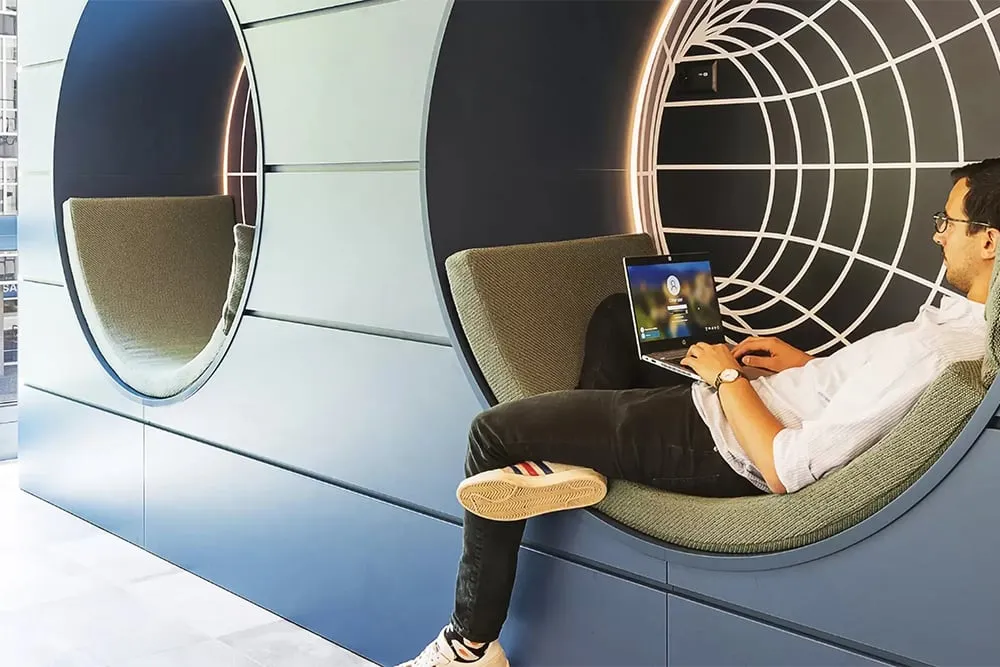
Like so many other trends, bleisure has been significantly accelerated by events during the pandemic. Mandatory working from home, for example, fuelled the desire to get out and travel. Many employees discovered that they could also work remotely from anywhere (“work from anywhere”). During successive waves of the viral crisis, this often meant working from a nearby hotel, which adapted quickly, often by refitting its rooms.
Leisure on the rise
After travel restrictions were lifted, it gradually became clear that people could work remotely for part of a business trip, while keeping a clear boundary between work and leisure time. Many observers also believe that bleisure will permanently and sustainably reshape the structure of business travel.
A 2022 study by the American Hotel & Lodging Association found that 89% of business travellers want to add leisure activities to their trip. According to Stratojets, half of all business trips that year had already been converted into leisure trips, with an average stay of seven days.
Bleisure: longer stays
Before the pandemic, business trips lasted two to three days on average. With an average stay of seven days, bleisure is a trend that many hotels could welcome with open arms, proactively adapting their infrastructure, whether quickly or gradually, to this “new type of traveller”. Two out of three bleisure trips appear to combine working days with days spent at leisure. Leisure days are also often booked at weekends, unlike previous business trips, which took place only on weekdays. This can have significant implications, including for pricing.
In one out of three bleisure stays, the two elements overlap, typically combining a working day with an evening spent at leisure. The most popular bleisure hotels are located in or near attractive leisure areas. Hotels in cities with attractions nearby are also in high demand. Thanks to their high level of service, hotels also appear to be much more popular with bleisure travellers than holiday homes and apartments.
Higher hotel spending
In general, a substantial part of a bleisure trip is covered by the employer, particularly transport and accommodation costs.
In many cases, this has become not only a way to foster employees’ professional and emotional loyalty, but also to attract new employees. Employers can also deduct a large proportion of the additional costs from their taxes. Employees, in turn, have a larger budget to spend on their own leisure activities. On average, the total amount spent during the leisure portion of the trip is equal to or greater than that spent during the business portion.
From corporate discounts to packages
Hotels should consider extending corporate discounts to leisure days, applying the same daily rate to the entire bleisure stay. It may also be important to offer attractive stay packages or deals that include various leisure activities, perhaps through a dedicated section of the website clearly aimed at bleisure guests.
Leisure options
To attract bleisure travellers, it is also important to showcase leisure options both within the hotel and beyond. This could be done, for example, through a dedicated leisure section on the website, featuring engaging text, photos and video clips about nearby tourist attractions. Hotels should not forget social media, which they often use.
Family and friends
Many bleisure guests also bring their partners, children and friends. This means, among other things, that it may be worthwhile for a hotel to set up a playroom for children.
The bleisure trend is therefore a further reason to develop the hotel of the future and make it as much of a hybrid destination as possible. More specifically, this means bringing together and integrating as many functions as possible under one roof, with both workspaces, such as coworking areas and meeting rooms, and leisure facilities, such as a restaurant, spa or wellness area, swimming pool, lobby bar and rooftop terrace.
More repeat visits
Bleisure guests also often return to the same destination. Compared with leisure-only tourists, they are around 50% less likely to cancel and 60% more likely to make another booking with you. American Airlines noted that by 2022, 45% of its sales would already be generated by bleisure travellers.
Question about this story? Ask your question
Keep following this
Get an email when a new story is published. No account needed.
- ThemeHotel guest experiences and audiences
- SubjectNews